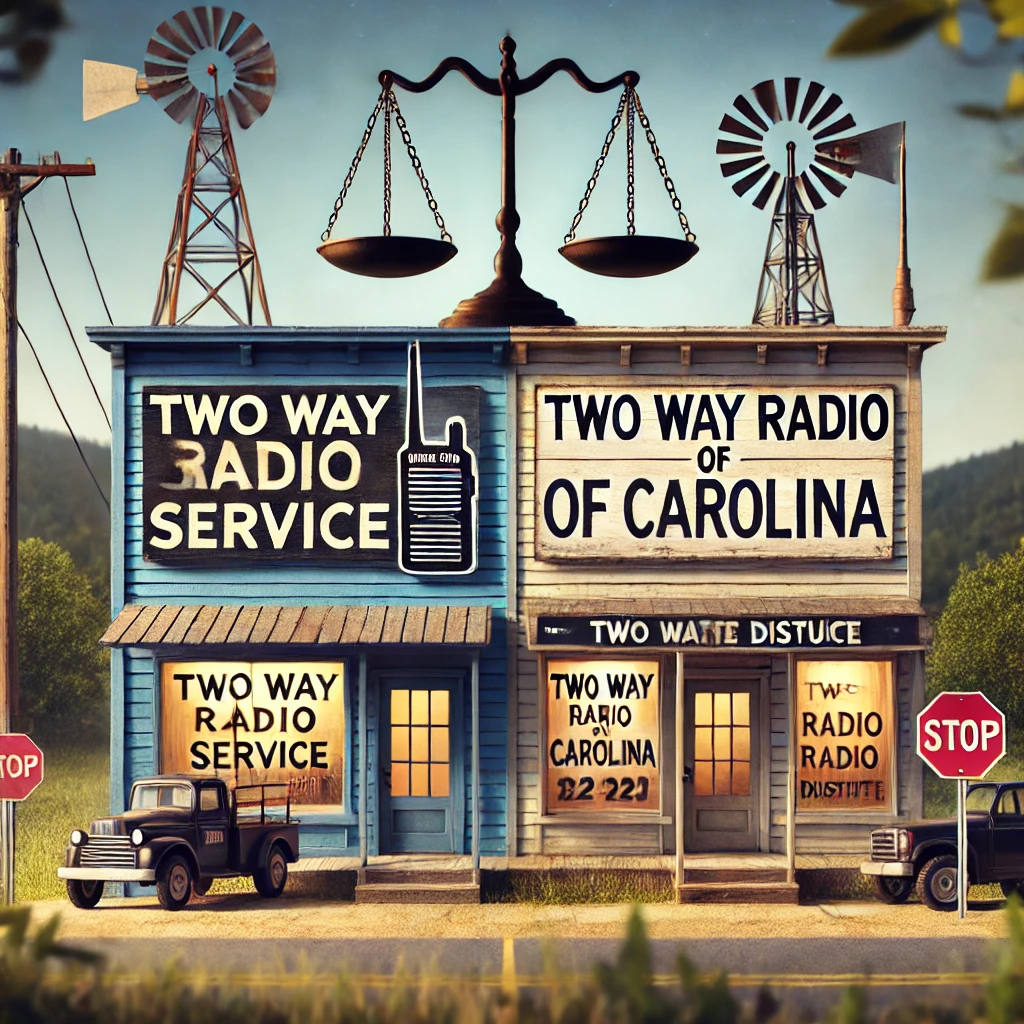
When starting a business in North Carolina, one of the most critical decisions you’ll make is choosing a business name. However, as the case of Two Way Radio Service, Inc. v. Two Way Radio of Carolina, Inc., 370 S.E.2d 408 (N.C. 1988), demonstrates, selecting a name too similar to another company can lead to significant legal challenges. Whether you’re picking a name for a new business, applying for a trademark or service mark, or involved in litigation involving unfair competition or deceptive trade practices, understanding this case is crucial to protecting your business.
Protect Your Business Name with Trademark Registration
As seen in the Two Way Radio case, securing your business name through proper trademark or service mark registration is crucial to avoiding legal conflicts and protecting your brand. At Finch Legal PLLC, we offer comprehensive trademark registration services, from conducting thorough name searches to enforcing your rights. Protect your business name today and prevent future disputes. Learn more about our services here.
Case Background: A Battle Over Business Names
In Two Way Radio Service, Inc. v. Two Way Radio of Carolina, Inc., both businesses operated in the radio communication industry and served the same geographic area, including Mecklenburg and Stanly counties. The plaintiff, Two Way Radio Service, Inc., had been doing business under that name since 1961 and sought to prevent the defendant from using the name Two Way Radio of Carolina, Inc., which they argued was “deceptively similar” under former North Carolina General Statute § 55-12(c).
The plaintiff alleged that the defendant’s name caused actual confusion among customers, even citing examples where checks meant for the plaintiff were mistakenly sent to the defendant. Despite these claims, the North Carolina Supreme Court ultimately ruled in favor of the defendant, holding that the phrase “two way radio” was descriptive of the services provided and therefore not eligible for exclusive use.
Legal Insights for Business Owners in North Carolina
- Descriptive Business Names and Trademark Protection in North Carolina
- The court in this case reaffirmed that descriptive terms cannot be monopolized unless they have acquired a secondary meaning.
- This ruling means that if your business name merely describes the services or products you offer, it may not be eligible for exclusive trademark protection.
- For instance, in the Two Way Radio case, the court noted that “two way radio” described a type of communication service, making it a generic term that could not be claimed solely by one company
- If you’re forming a new business in North Carolina, avoid descriptive names unless you are prepared to demonstrate that your name has gained recognition beyond its literal meaning. Names with unique or suggestive elements can help you avoid legal disputes and protect your brand through trademark registration.
- Secondary Meaning and Its Importance in North Carolina Trademark Law
- Secondary meaning refers to a scenario where a descriptive name has become so associated with a particular business that it signifies the business rather than the product or service.
- However, in Two Way Radio, the plaintiff failed to show that “two way radio” had acquired secondary meaning.
- Without such proof, the plaintiff could not prevent other businesses from using the term.
- If your business operates in competitive markets like Raleigh, Charlotte, or Greensboro, establishing secondary meaning is essential for strong brand protection. Consistent branding, marketing, and customer interaction can help your name become synonymous with your business over time.
- Unfair Competition and Deceptive Trade Practices in North Carolina
- The plaintiff also argued that the defendant’s use of a similar name constituted unfair competition and deceptive trade practices.
- Unfair competition laws are meant to protect businesses from being misled by competitors’ names, but the court ruled that there was insufficient evidence of confusion among consumers, especially since “two way radio” was a descriptive term widely used in the industry.
- : Businesses in North Carolina—whether in rural areas like Currituck or Dare County, or urban centers like Raleigh and Greensboro—should be aware of the importance of distinct branding. Conduct a thorough search for existing business names and trademarks before settling on a name to minimize the risk of unfair competition claims.
- Corporate Name Registration in North Carolina
- North Carolina General Statutes prohibit corporations from using names that are “deceptively similar” to those already registered in the state.
- In this case, while the Secretary of State had initially allowed both businesses to operate with similar names, the court concluded that common law principles should guide interpretation of the statute.
- This decision shows that even if your business name is approved by the state, it may still be subject to legal challenge.
- When incorporating your business in North Carolina, it’s essential to think beyond the Secretary of State’s approval. Consider consulting an attorney who is experienced in trademarks and business law to ensure that your corporate name is legally sound.
What This Means for North Carolina Business Owners
If you’re starting a business in North Carolina, whether in a tourist region like the Outer Banks or a growing city like Charlotte, selecting a unique business name is vital for avoiding legal disputes. The Two Way Radio case serves as a reminder that:
- Descriptive terms are difficult to protect under trademark law.
- Establishing secondary meaning can strengthen your claim to a name.
- Unfair competition laws can only protect your name if you can demonstrate actual consumer confusion.
- Corporate name approval by the Secretary of State does not guarantee exclusive rights to the name.
Trademark and Business Name Disputes in North Carolina: What to Do
If you’re currently facing a business name or trademark dispute, or if you’re involved in litigation around unfair competition and deceptive trade practices, Finch Legal PLLC can help. We offer tailored legal advice to guide North Carolina businesses through the complexities of naming, branding, and protecting intellectual property.
Contact Us
If you’re forming a business or facing a legal dispute over your business name, contact Finch Legal PLLC for expert guidance. With our in-depth understanding of North Carolina’s business and trademark laws, we can help you protect your business and brand.


Leave a Reply